


Everything You Need to Know About Vaping

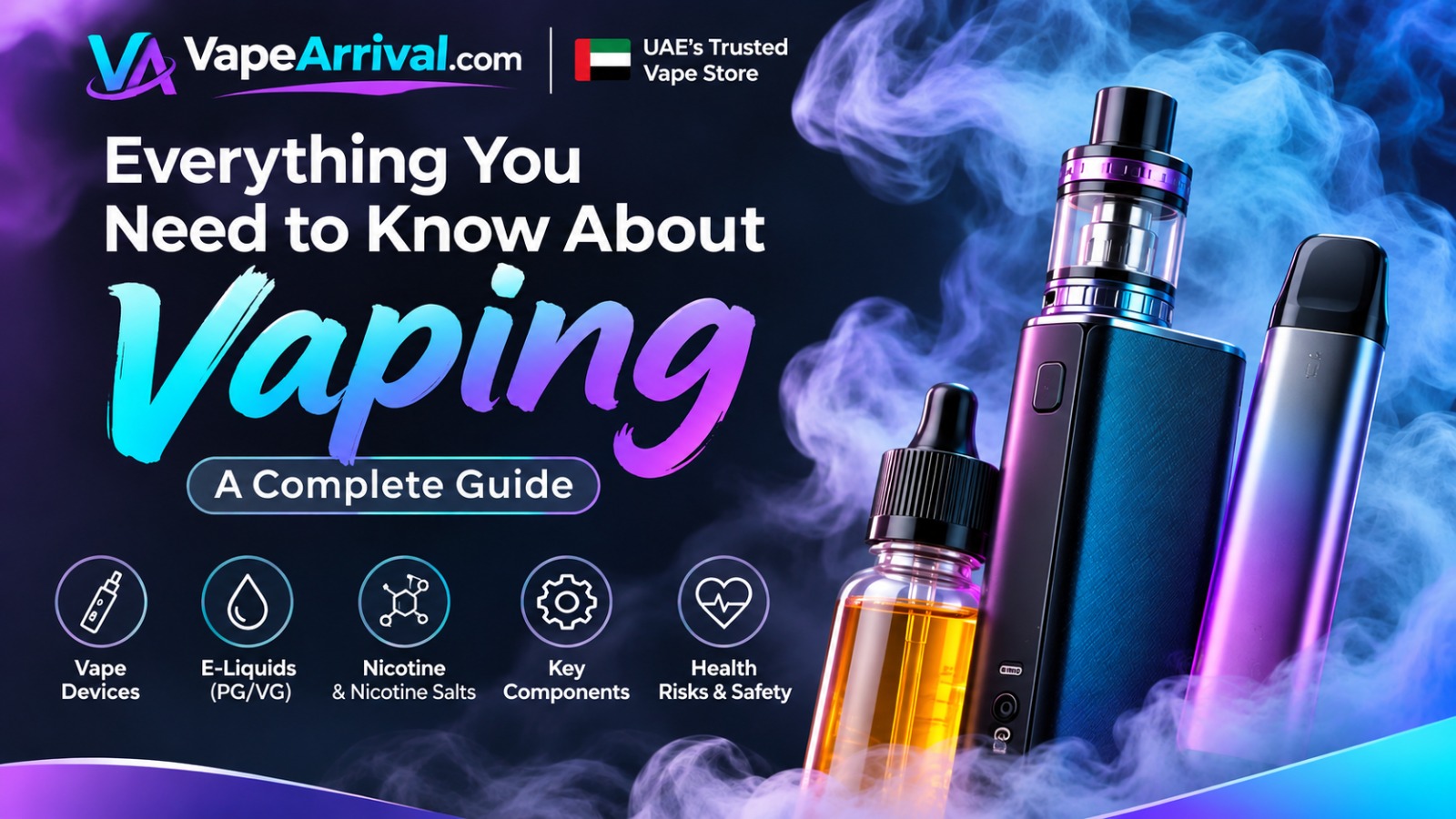
Everything You Need to Know About Vaping: A Complete Guide to Vape Devices, E-Liquids, Nicotine and Safety
Written by Fahim_Nahid
Vaping has become a widely discussed topic in the electronic cigarette industry. From disposable vape devices and refillable pod systems to e-liquids, vape coils and advanced vape kits, the market includes different technologies, components and product categories.
However, understanding vaping involves more than knowing the names of different devices. You also need to understand how electronic cigarettes work, what vape liquids contain, how individual components function and what potential health risks vaping may involve.
For example, people often search for questions such as what vaping is, how a vape works, what nicotine salts mean and how disposable vapes differ from pod systems. Although these topics connect to one another, each requires a clear explanation.
That’s why this comprehensive guide from Vape Arrival brings the essential information together in one place.
Whether you are researching electronic cigarette technology, learning about vape components or exploring common vaping terminology, this guide will help you understand the subject.
Important Health Notice: Vaping is not risk-free. Many electronic cigarettes contain nicotine, which is addictive. People who do not smoke or use nicotine should not start vaping. This article provides educational information and does not encourage nicotine consumption.
Quick Answer: What Should You Know About Vaping?
Vaping involves using an electronic device that heats a liquid to produce an aerosol. These devices include disposable vapes, pod systems, vape pens and advanced electronic cigarette kits. Their liquids may contain nicotine, flavouring substances, propylene glycol and vegetable glycerin. Understanding device components, product specifications, nicotine information and potential health risks is essential when researching vaping.
1. What Is Vaping?
Vaping refers to using an electronic device that heats a liquid to produce an aerosol that a person can inhale.
People commonly call these products:
- Vapes
- Electronic cigarettes
- E-cigarettes
- Vape pens
- Pod systems
- Electronic Nicotine Delivery Systems (ENDS)
Unlike traditional cigarettes, which burn tobacco to produce smoke, electronic cigarettes use a battery-powered heating element to heat a liquid.
The liquid may contain nicotine, flavouring substances, propylene glycol (PG), vegetable glycerin (VG) and other ingredients.
However, the aerosol from an electronic cigarette is not simply harmless water vapour. It may contain fine particles, metals and potentially harmful chemicals.
How Does Vaping Work?
Most electronic cigarette devices contain three essential systems:
- Power source: A battery supplies electrical energy to the device.
- Heating element: A coil or mesh element generates heat.
- Liquid storage: A tank, cartridge or pod holds the e-liquid.
When someone activates the device, electrical energy heats the heating element. The heat then acts on the liquid and produces an aerosol.
Finally, the device’s airflow system carries that aerosol towards the mouthpiece.
The exact mechanism varies according to the manufacturer’s design.
Understanding these components makes it easier to recognize the differences between disposable vapes, refillable pod systems, vape pens and advanced vape kits.
Vape vs Traditional Cigarettes: What Is the Difference?
Although both products involve inhaling substances into the respiratory system, their technology differs.
| Feature | Traditional Cigarette | Electronic Cigarette |
|---|---|---|
| Main mechanism | Burns tobacco | Heats liquid |
| Main output | Smoke | Aerosol |
| Power source | No battery required | Usually battery-powered |
| Tobacco combustion | Yes | No conventional tobacco combustion |
| Common ingredients | Tobacco and additives | PG, VG, flavourings and sometimes nicotine |
| Health considerations | Significant health risks | Also carries health risks |
However, this comparison does not mean electronic cigarettes are safe. Both products can expose users to harmful substances.
2. What Are the Different Types of Vape Devices?
Electronic cigarette manufacturers produce several types of vape devices. Each category has different construction methods, battery systems, liquid storage arrangements and heating components.
Let’s examine the most common categories.
2.1 Disposable Vape Devices
A disposable vape is an electronic cigarette designed for limited use rather than conventional long-term refilling and component replacement.
A typical disposable vape may contain:
- Built-in battery
- Pre-filled e-liquid reservoir
- Integrated heating coil
- Airflow system
- Mouthpiece
Some manufacturers design rechargeable disposable vapes. However, a rechargeable battery does not necessarily mean that the device supports refilling.
Furthermore, disposable electronic cigarettes raise environmental concerns because they contain batteries and electronic components.
Users should follow local electronic waste and battery disposal requirements rather than placing these devices in ordinary household waste.
Related VapeArrival category: Disposable Vape in Dubai UAE.
2.2 Pod System Vapes
A pod system vape uses a removable cartridge, commonly called a pod, to hold e-liquid.
Depending on the manufacturer’s design, pod systems may include:
- Refillable pods
- Pre-filled cartridges
- Integrated coils
- Replaceable coils
- Rechargeable batteries
- Adjustable airflow
- Electronic controls
Some pod systems feature automatic activation, while others include additional electronic settings.
Unlike conventional disposable devices, many pod systems support repeated use with compatible replacement components.
However, pod compatibility varies between manufacturers and models.
Related VapeArrival category: Pod System Kits.
2.3 Vape Pens
Vape pens are electronic cigarette devices with a generally slim, cylindrical design.
Depending on the model, a vape pen may contain:
- Rechargeable battery
- Liquid tank or cartridge
- Heating coil
- Mouthpiece
- Airflow channel
Some manufacturers include simple activation systems, while others provide adjustable electronic controls.
In addition, battery capacity, construction and compatibility vary between models.
2.4 Box Mods and Advanced Vape Kits
Box mods are larger electronic cigarette devices that may include advanced electronic controls.
Depending on the model, manufacturers may provide features such as:
- Adjustable wattage
- Digital displays
- Electronic temperature controls
- Replaceable coils
- Refillable tanks
- Rechargeable batteries
- Adjustable airflow
Some advanced devices also support different tank and coil configurations.
However, these features do not make vaping safer.
Related VapeArrival category: Mods and Kits.
2.5 Refillable Vape Devices
Refillable vape devices use a tank or pod that allows users to add e-liquid separately.
These devices may contain:
- Refillable cartridge
- E-liquid reservoir
- Heating element
- Battery
- Mouthpiece
However, not every refillable device supports every e-liquid formulation.
Compatibility depends on the device design, coil specifications and manufacturer instructions.
Most importantly, reusable or refillable designs do not eliminate the potential health risks associated with vaping.
Disposable Vape vs Pod System vs Mod Kit
Understanding the differences between these categories helps explain their construction and technical features.
| Feature | Disposable Vape | Pod System | Mod Kit |
|---|---|---|---|
| General design | Compact | Compact or medium-sized | Often larger |
| Liquid storage | Usually pre-filled | Pod or cartridge | Tank or compatible pod |
| Battery | Model-dependent | Usually rechargeable | Model-dependent |
| Replacement parts | Limited | Often available | Often available |
| Electronic controls | Usually limited | Model-dependent | Often more extensive |
| Maintenance | Limited | Model-dependent | Model-dependent |
There is no universally suitable device design. Specifications and compatibility vary between products.
For more detailed information, see our Vape Buying Guide.
3. What Are the Main Components of a Vape Device?
Understanding vape components helps explain how electronic cigarettes work.
Although manufacturers use different designs, most devices contain several common components.
| Component | Main Function |
|---|---|
| Battery | Supplies electrical energy |
| Coil | Generates heat |
| Wick | Transfers liquid to the heating element in applicable designs |
| Pod | Holds e-liquid in pod-based systems |
| Tank | Stores e-liquid in tank-based systems |
| Mouthpiece | Provides the aerosol outlet |
| Airflow system | Controls air movement through the device |
| Circuit board | Manages electronic functions |
| Charging port | Connects compatible charging equipment |
Some manufacturers combine multiple components into a single assembly. Therefore, not every electronic cigarette contains all these parts separately.
What Is a Vape Coil?
A vape coil is the heating element found in many electronic cigarette devices.
Manufacturers commonly construct coils using metal wire or mesh heating elements.
When electrical energy passes through the coil, it generates heat. The heating element then transfers that heat to the surrounding liquid or wick system, producing an aerosol.
Coils vary according to:
- Electrical resistance
- Construction
- Material
- Device compatibility
- Manufacturer specifications
Always check the manufacturer’s documentation before identifying a compatible replacement.
Related category: Replacement Coils.
What Is a Mesh Coil?
A mesh coil uses a metal mesh heating element rather than a conventional wire arrangement.
Manufacturers use different mesh designs depending on their device and coil specifications.
However, mesh construction alone does not establish product quality, safety or compatibility.
What Is a Vape Pod?
A vape pod is a cartridge that connects to a pod-based electronic cigarette.
It generally holds e-liquid and connects to the device’s electrical and heating systems.
Depending on the design, a pod may contain:
- Integrated heating coil
- Replaceable coil
- Refillable liquid reservoir
- Pre-filled liquid chamber
However, manufacturers design pods for particular device families. Therefore, users should never assume that one pod will fit every electronic cigarette.
Related category: Pod Cartridges.
What Is a Vape Tank?
A vape tank is a liquid storage component found in many tank-based electronic cigarette designs.
Depending on the device, it may include a glass or other liquid reservoir, a compatible coil assembly and a connection to the device.
Tank specifications and replacement parts vary between manufacturers.
4. What Is E-Liquid or Vape Juice?
E-liquid, also called vape juice or vape liquid, is the liquid used in many electronic cigarette devices.
Manufacturers use different formulations depending on the product.
Common ingredients may include:
- Propylene glycol (PG)
- Vegetable glycerin (VG)
- Flavoring substances
- Nicotine, where included
- Other formulation ingredients
However, the exact composition and concentration can vary between manufacturers.
What Is Propylene Glycol (PG)?
Propylene glycol is a relatively thin liquid ingredient that manufacturers use in various products.
In e-liquid formulations, PG can act as a carrier for other ingredients.
Its physical properties differ from vegetable glycerin.
What Is Vegetable Glycerin (VG)?
Vegetable glycerin is a thicker liquid ingredient used in many e-liquid formulations.
Its viscosity influences the physical characteristics of the finished liquid.
What Is the Difference Between PG and VG?
| Feature | Propylene Glycol (PG) | Vegetable Glycerin (VG) |
|---|---|---|
| Full name | Propylene Glycol | Vegetable Glycerin |
| Consistency | Thinner | Thicker |
| Common role | Liquid carrier | Liquid base ingredient |
| Formulation | Varies by product | Varies by product |
Neither ingredient should be considered harmless to inhale simply because manufacturers also use it in other consumer products.
What Does VG/PG Ratio Mean?
The VG/PG ratio describes the relative proportions of vegetable glycerin and propylene glycol in an e-liquid formulation.
For example, manufacturers may list ratios such as:
- 50VG/50PG
- 60VG/40PG
- 70VG/30PG
These ratios describe the liquid’s composition.
However, the suitability of a particular formulation depends on the device specifications and manufacturer guidance.
Related VapeArrival category: E-Liquid.
What Is Vape Flavouring?
Manufacturers may add flavouring substances to e-liquids to create different flavour profiles.
These ingredients vary between formulations.
However, a flavouring ingredient’s safety for consumption does not automatically establish its safety for inhalation.
Therefore, readers should not interpret flavour descriptions as evidence of health or safety benefits.
5. Understanding Nicotine in Vape Products
Nicotine is an addictive chemical naturally found in tobacco.
Many electronic cigarettes contain nicotine, although manufacturers also market some products as nicotine-free.
Product labels commonly express nicotine concentration in milligrams per millilitre (mg/mL) or as a percentage.
For example:
- 10 mg/mL
- 20 mg/mL
- 2%
However, consumers should always check the exact product label and manufacturer documentation.
What Are Nicotine Salts?
Nicotine salts are nicotine formulations in which nicotine combines with an acid.
This chemical formulation differs from freebase nicotine.
Manufacturers use nicotine salts in certain e-liquid products, but concentrations and compositions vary.
What Is Freebase Nicotine?
Freebase nicotine is another chemical form of nicotine that manufacturers use in some e-liquid formulations.
Its chemical properties differ from nicotine salts.
However, both formulations contain addictive nicotine and carry health risks.
Nicotine Salts vs Freebase Nicotine
| Feature | Nicotine Salts | Freebase Nicotine |
|---|---|---|
| Formulation | Nicotine combined with an acid | Freebase form of nicotine |
| Chemical properties | Different from freebase nicotine | Different from nicotine salts |
| Product availability | Varies | Varies |
| Nicotine content | Product-specific | Product-specific |
| Addiction risk | Yes | Yes |
Therefore, neither formulation should be considered harmless or non-addictive.
What Does Nicotine-Free Mean?
A nicotine-free vape product is intended to contain no nicotine.
However, nicotine-free does not mean harmless.
Electronic cigarette aerosol may still contain fine particles, metals and potentially harmful chemicals.
Furthermore, product labels alone do not provide independent proof of a product’s composition.
6. Understanding MTL, DTL and RDL Terminology
MTL, DTL and RDL are terms that describe different airflow and inhalation patterns associated with electronic cigarette devices.
What Is MTL?
MTL stands for Mouth-to-Lung.
It describes an inhalation pattern in which aerosol first enters the mouth before moving into the lungs.
Manufacturers also use this term to describe certain airflow configurations.
What Is DTL?
DTL stands for Direct-to-Lung.
It describes an inhalation pattern in which aerosol moves more directly into the lungs.
Some manufacturers associate this terminology with particular device and airflow designs.
What Is RDL?
RDL stands for Restricted Direct-to-Lung.
Manufacturers use this term for designs that provide airflow characteristics between typical MTL and DTL configurations.
However, these terms describe device characteristics and inhalation patterns. They do not indicate that a vaping method is medically safe.
7. Understanding Vape Batteries and Charging Systems
A vape battery supplies electrical energy to the heating and electronic systems.
Depending on the device, manufacturers may use built-in or removable batteries.
Common battery specifications include:
- Battery capacity (mAh)
- Voltage
- Power output
- Charging connection
- Battery protection features
What Does mAh Mean in a Vape Battery?
mAh stands for milliampere-hour.
It measures a battery’s rated charge capacity.
For example, a battery specification of 1,500mAh describes its rated capacity. However, it does not guarantee a particular operating time.
Actual performance depends on several factors, including power consumption, battery condition and device design.
What Is Wattage?
Wattage measures electrical power.
Some advanced electronic cigarette devices display wattage as part of their electronic specifications.
However, higher wattage does not automatically mean better quality or greater safety.
Understanding USB-C Charging
Some electronic cigarette devices include a USB Type-C charging connection.
However, charging requirements differ between manufacturers and models.
Always follow the device manufacturer’s instructions and use compatible charging equipment.
In addition, never use visibly damaged batteries or modified battery assemblies.
Damaged lithium-ion batteries can overheat, catch fire or explode.
8. How to Understand Vape Product Specifications
Product specifications help readers identify what a particular electronic cigarette contains and which components it supports.
However, specifications vary between manufacturers. Therefore, always check the exact product information instead of relying on general descriptions.
Step 1: Identify the Product Category
First, determine whether the product is:
- Disposable electronic cigarette
- Pod system
- Vape pen
- Advanced vape kit
- E-liquid
- Replacement pod
- Replacement coil
This classification helps you understand which specifications matter.
Step 2: Check the Device Model
Next, identify the exact manufacturer and model.
Two devices from the same brand may use different batteries, cartridges, coils and charging systems.
Step 3: Review the Technical Specifications
Check the information provided by the manufacturer.
For hardware, this may include:
- Battery capacity
- Power range
- Coil resistance
- Pod capacity
- Charging connection
- Supported accessories
For e-liquid, it may include:
- Ingredients
- Nicotine concentration
- VG/PG composition
- Bottle volume
- Manufacturer information
Step 4: Verify Compatibility
Finally, check the manufacturer’s compatibility documentation.
For example, a replacement pod that looks similar to another cartridge may not connect correctly or function with the same device.
Step 5: Review Safety and Regulatory Information
Before relying on a product description, check its manufacturer documentation and applicable local requirements.
If essential product information is missing, ask the seller or manufacturer for clarification.
9. Vape Device Maintenance and Compatibility
Different electronic cigarette devices have different maintenance requirements.
For reusable devices, manufacturers may provide instructions about:
- External cleaning
- Pod and cartridge inspection
- Replacement component compatibility
- Battery condition
- Charging requirements
- Manufacturer-approved accessories
Why Is Vape Compatibility Important?
Vape components are not universally interchangeable.
For example:
- A pod designed for one device may not fit another.
- Replacement coils must match the compatible coil platform.
- E-liquid suitability depends on device specifications.
- Charging accessories must meet manufacturer requirements.
Therefore, always check the exact device model before relying on a replacement component’s compatibility.
Vape Arrival provides dedicated categories for Pod Cartridges and Replacement Coils.
These categories help readers explore relevant product types and specifications.
10. Common Mistakes to Avoid When Researching Vape Products
Readers can misunderstand electronic cigarette specifications when they rely only on product names or advertising descriptions.
Here are some common mistakes and better approaches.
| Common Mistake | Why It Causes Problems | Better Approach |
|---|---|---|
| Assuming all pods fit every device | Manufacturers use different connections and designs | Check the exact device model |
| Confusing rechargeable with refillable | Charging and refilling are different features | Check the manufacturer’s product description |
| Assuming nicotine-free means harmless | Other aerosol ingredients may still pose risks | Review health information |
| Choosing a coil by appearance | Similar coils may have different specifications | Check the compatible coil series |
| Ignoring battery damage | Damaged batteries can cause fires or injuries | Stop using damaged devices |
| Relying only on puff count | Advertised estimates do not establish product quality | Review complete product specifications |
| Assuming all e-liquids are identical | Ingredients and concentrations vary | Check the exact product label |
| Ignoring local regulations | Product requirements differ between countries | Consult official UAE sources |
In addition, readers should avoid unsupported product claims and unverified health information.
11. Vape Troubleshooting: Common Problems and Possible Causes
Electronic cigarette devices can develop technical problems. However, users should never dismantle sealed devices or attempt repairs involving damaged batteries.
The following table explains common problems and safe first considerations.
| Problem | Possible Cause | Safe First Action |
|---|---|---|
| Device does not activate | Battery, connection or internal fault | Check manufacturer instructions and stop if damaged |
| Charging does not work | Cable, charging port or battery fault | Check compatible charging equipment |
| E-liquid leakage | Damaged seal or cartridge issue | Stop using the leaking device and consult manufacturer guidance |
| Burnt or unusual smell | Heating component or liquid problem | Stop using the device |
| Weak aerosol output | Device malfunction or component issue | Check the manufacturer’s troubleshooting guidance |
| Device becomes unusually hot | Battery or electrical fault | Stop using and disconnect safely if possible |
| Blinking indicator | Device-specific warning | Consult the product manual |
| Pod does not connect | Incorrect or incompatible cartridge | Verify the exact model compatibility |
If a Vape Device Does Not Work
Follow this general safety-first approach:
- Identify the exact device model.
- Check the manufacturer’s troubleshooting documentation.
- Look for visible damage, leakage or unusual heat.
- Avoid using damaged or malfunctioning equipment.
- Contact the manufacturer or a qualified service provider where appropriate.
Do not open sealed batteries, modify electrical connections or attempt unauthorized repairs.
For more detailed explanations, read Vape Arrival’s Vape Troubleshooting Guide.
12. What Are the Potential Health Risks of Vaping?
Vaping is not risk-free or harmless.
Many electronic cigarettes contain nicotine, which is highly addictive. In addition, their aerosol may contain harmful particles and chemicals.
According to the US Centers for Disease Control and Prevention (CDC), e-cigarette aerosol can contain:
- Nicotine
- Ultrafine particles
- Volatile organic compounds
- Heavy metals, including nickel, tin and lead
- Certain cancer-causing chemicals
- Some flavouring chemicals
Furthermore, scientists continue to investigate the long-term health effects of vaping.
Nicotine Addiction
Nicotine is highly addictive.
Repeated exposure can lead to dependence. Therefore, nicotine use raises particular concerns for adolescents and pregnant people.
Respiratory Exposure
Electronic cigarette aerosol is not simply water vapour.
Instead, it may contain fine particles and chemicals that users inhale into their respiratory systems.
Pregnancy Considerations
Nicotine exposure during pregnancy can harm fetal development.
For this reason, pregnant people should avoid electronic cigarettes that contain nicotine and discuss relevant health concerns with a qualified healthcare professional.
Adolescent Health
Nicotine can affect the developing brain.
In particular, exposure may interfere with areas associated with attention, learning, mood and impulse control.
Consequently, young people should not use electronic cigarettes.
Battery-Related Injuries
Electronic cigarette batteries can cause overheating, fires and explosions when users handle or charge them incorrectly.
Therefore, users should follow manufacturer safety instructions and avoid damaged devices.
Is Vaping Safer Than Smoking?
This question requires careful interpretation.
Some research indicates that e-cigarette aerosol generally contains fewer harmful chemicals than smoke from combustible cigarettes. However, this does not make vaping safe.
The health risks of vaping remain significant, and researchers continue to investigate its short- and long-term effects.
People who have never smoked or used nicotine should not start vaping.
Adults who smoke and want to stop should consult a qualified healthcare professional about evidence-based smoking cessation options.
13. Vape Safety and Storage Considerations
Electronic cigarette products require careful handling and storage.
Consider the following safety points:
Battery safety: Avoid damaged devices, incompatible chargers and unauthorized battery modifications.
E-liquid storage: Keep e-liquids securely stored away from children and pets.
Nicotine exposure: Nicotine-containing liquids can cause poisoning if someone swallows them or absorbs them through the skin.
Product information: Check manufacturer specifications, ingredient information and relevant regulatory documentation.
Disposal: Use appropriate electronic waste and battery disposal channels for electronic cigarette products.
Additionally, never dismantle sealed disposable devices or attempt to repair damaged battery assemblies.
14. Vape Regulations in Dubai and the UAE
Vaping laws and electronic cigarette product requirements vary between countries.
In the United Arab Emirates, electronic smoking devices and associated liquids fall under applicable regulatory requirements.
The UAE has introduced product standards for electronic smoking devices and related products. In addition, its excise tax legislation addresses electronic smoking devices and liquids, including products that may or may not contain nicotine.
Therefore, businesses and consumers should check current requirements before purchasing, importing, selling or distributing these products.
Always verify applicable age restrictions, product conformity requirements, advertising restrictions and other current regulations through official sources.
15. Common Vape Terminology Explained
Understanding common vaping terminology makes electronic cigarette product descriptions easier to interpret.
| Term | Meaning |
|---|---|
| Vape | Electronic cigarette or vaping device |
| E-cigarette | Electronic cigarette |
| E-liquid | Liquid used in electronic cigarettes |
| Vape juice | Another name for e-liquid |
| Pod | Cartridge that holds e-liquid |
| Coil | Heating element |
| Mesh coil | Heating element that uses a mesh design |
| VG | Vegetable glycerin |
| PG | Propylene glycol |
| Nicotine salts | A nicotine formulation |
| Freebase nicotine | A different chemical form of nicotine |
| MTL | Mouth-to-Lung |
| DTL | Direct-to-Lung |
| RDL | Restricted Direct-to-Lung |
| mAh | Milliampere-hour, a battery capacity unit |
| Ohm (Ω) | Unit of electrical resistance |
| Watt (W) | Unit of power |
| Mod | Electronic cigarette device with advanced controls |
| Disposable vape | Device designed for limited use |
| Refillable pod | Cartridge designed to be refilled |
| Battery capacity | Rated battery charge capacity |
Frequently Asked Questions About Vaping
1. What is vaping in simple terms?
Vaping means using an electronic device that heats a liquid to produce an aerosol. The liquid may contain nicotine, flavouring substances and other ingredients. The user inhales this aerosol through the device’s mouthpiece.
2. How does a vape device work?
A vape device uses electrical energy from a battery to heat a liquid through a heating element. As a result, the device produces an aerosol that travels through its airflow system and mouthpiece.
3. What are the different types of vape devices?
Common categories include disposable electronic cigarettes, pod systems, vape pens, refillable vape devices and advanced box-mod systems. Each category has different construction methods, battery systems and liquid storage arrangements.
4. What is e-liquid made of?
Many e-liquids contain propylene glycol (PG), vegetable glycerin (VG), flavouring substances and, in some products, nicotine. However, ingredients and concentrations vary between manufacturers.
5. What is the difference between nicotine salts and freebase nicotine?
Nicotine salts combine nicotine with an acid, while freebase nicotine represents a different chemical form. Both contain addictive nicotine and carry health risks.
6. Are nicotine-free vapes completely safe?
No. Nicotine-free electronic cigarettes may still produce aerosols containing fine particles and potentially harmful chemicals. Therefore, nicotine-free does not mean risk-free.
7. Are all vape pods compatible with every vape device?
No. Manufacturers generally design pod cartridges for specific devices or product series. Therefore, users should check the exact model and compatibility information before identifying a replacement pod.
8. What are the potential health risks of vaping?
Vaping can expose people to nicotine, fine particles, metals and other potentially harmful chemicals. Furthermore, nicotine can cause addiction, and researchers continue to investigate the long-term health effects of electronic cigarettes.
Conclusion: Everything You Need to Know About Vaping
Understanding vaping involves more than learning about electronic cigarette devices. It also means understanding e-liquid ingredients, nicotine formulations, batteries, heating coils, airflow systems and product specifications.
From disposable electronic cigarettes to refillable pod systems and advanced vape kits, different products have different designs and technical features.
However, product differences do not remove the potential health risks associated with vaping.
Nicotine addiction, respiratory exposure, battery safety and product quality all deserve careful consideration.
At Vape Arrival, our educational content aims to explain vape-related terminology, electronic cigarette components and product categories in clear, accessible language.
Ultimately, reliable health information, accurate manufacturer documentation and current UAE regulations should guide readers when researching electronic cigarette products.
Make informed decisions based on reliable information, understand the potential risks and never assume that any vaping product is risk-free.
Explore More Educational Resources from Vape Arrival
Continue learning through these related educational guides:
- Vape Buying Guide – Understand vape product categories and specifications.
- Vape Troubleshooting Guide – Learn about common device problems and safe troubleshooting considerations.
- Vape Delivery Shopping Guide – Understand product information and delivery-related considerations.
- Vape Brands Product Guide – Explore product brands, specifications and compatibility information.
For additional information about Vape Arrival and its product information approach, visit the About Vape Arrival page.
Explore Vape Arrival’s educational resources to learn more about electronic cigarette technology, product specifications and vaping terminology.